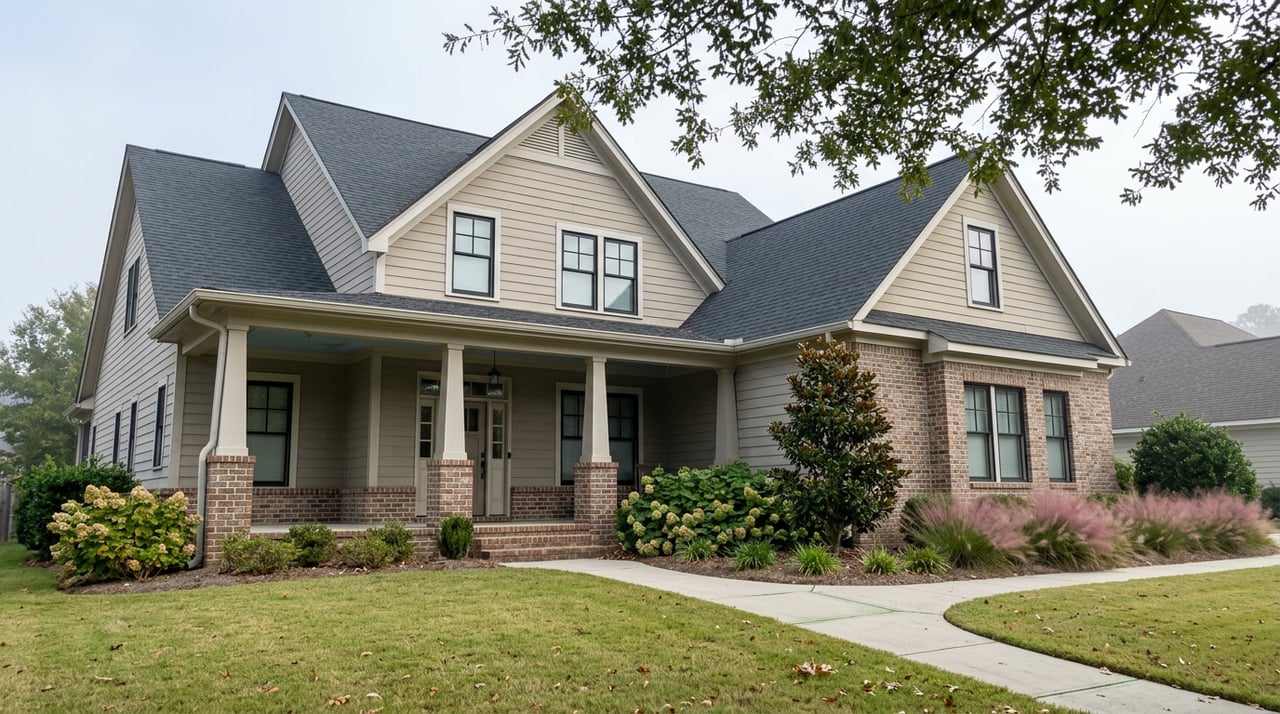
Buying a Historic Home in Newnan: What to Know Before Renovating
September 24, 2026
September 24, 2026
"A Building Permit shall not be issued without a Certificate of Appropriateness."
That single line, buried deep in the City of Newnan's zoning ordinance, is the entire reason two homes on the same block in Newnan can be priced within $20,000 of each other and still take a buyer a year apart to renovate. It has nothing to do with square footage, lot size, or how recently the kitchen was updated. It has to do with a boundary line most buyers never think to ask about until they're already trying to replace a window.
Newnan earned the nickname "the City of Homes" honestly. The town was spared much of the Civil War's destruction because its churches and college served as hospitals for wounded soldiers on both sides, which is why antebellum and Victorian houses still line streets like Greenville and Jackson instead of having been rebuilt from scratch. But that history creates a layer of process most buyers don't expect, and it's worth understanding before you fall for a house you can't easily change.
The city's own materials describe six National Register historic districts: Cole Town, College-Temple, the Downtown Business District, Greenville-LaGrange, the Newnan Cotton Mill and Mill Village, and Platinum Point. Each one grew up differently, and that history still shows up in what you're looking at when you tour a listing.
| District | What Sets It Apart |
|---|---|
| Cole Town | Built up around the R.D. Cole Manufacturing Company, founded in 1854; the antebellum home Buena Vista served as Confederate headquarters during the Battle of Brown's Mill |
| College-Temple | Laid out in 1828 around a school lot that hosted seven different schools between 1829 and 1975, now the site of the Children Connect Museum |
| Downtown Business District | The original nine-block courthouse square platted in 1828, anchored by the 1904 Neoclassical courthouse |
| Greenville-LaGrange | A 61-acre residential corridor developed over more than a century along two major roads |
| Newnan Cotton Mill and Mill Village | Added to the National Register in April 2002; the 1888 mill building is now loft apartments |
| Platinum Point | A 43-acre enclave that grew with the rise of the automobile, its oldest house dating to 1895 |
There's also a seventh district that doesn't always make the city's own count: Chalk Level, roughly 261 acres in southeast Newnan that took shape in the late 1800s as a place where the city's Black residents built homes, churches, schools, and businesses during segregation. Some city pages list six districts, others list seven with Chalk Level included. If you're comparing sources online, that's why the number moves.
Here's the part that trips buyers up. Being listed on the National Register of Historic Places is, by itself, mostly a recognition. It can unlock tax incentives for rehabilitation, but it doesn't hand a commission the power to approve or reject your window choice. That power comes from a separate, local layer: the city's own zoning ordinance, which creates two overlay categories, the Historic Residential Overlay District and the Historic Preservation Overlay District. A property inside one of those local overlays needs a Certificate of Appropriateness, or COA, before the city will issue a building permit for exterior work.
In practice, most of Newnan's six (or seven) National Register districts also sit inside one of these local overlays, so the distinction can feel academic. But it's the local overlay, not the national listing, that actually has enforcement teeth. That matters if you're comparing two "historic" addresses and assuming they carry the same obligations. Ask which zoning overlay applies to the parcel, not just whether it appears on a historic tour map.
Georgia's historic preservation law is specific about where the line falls, and Newnan's ordinance follows that same logic. You'll need a COA before:
You generally don't need one for:
That last category surprises people. A fresh coat of paint on a Greenville-LaGrange Victorian doesn't require a hearing. New vinyl-clad windows on that same house do, and city staff will likely ask you to match the original sash pattern and material instead.
This is the piece that actually costs buyers time and money, and it's specific to how Newnan runs its process. The city's Planning Commission, which reviews COA applications, meets on the second Tuesday of each month. Applications have to be submitted by 5:00 PM on the 15th day of the month before that meeting.
Miss that deadline by a day and you're not waiting a week, you're waiting closer to six weeks for the next hearing slot. If you close on a Greenville-LaGrange home in October planning to replace failing windows before winter, and you don't have your COA application in by mid-September, that project doesn't start until the commission's next meeting, and possibly not until spring depending on contractor scheduling after approval. Buyers who assume a historic-district renovation runs on the same timeline as a permit pulled for a house built in 2005 are usually the ones who end up frustrated three months into ownership.
Agents working this market describe a real spread inside these districts, from around $500,000 for a fully restored century-old Craftsman bungalow up to well over $1 million for a turn-of-the-century Greek Revival mansion on Greenville Street. Condition and square footage explain part of that gap, but not all of it.
Some of what you're paying for, whether you realize it or not, is how much exterior compliance work has already been done. A house where a previous owner already went through the COA process to install period-appropriate windows, restore original siding, or rebuild a porch to the district's standard is handing you a finished approval trail. A house that still has 1980s vinyl replacement windows or non-original siding is handing you a to-do list that runs through a monthly public meeting before you can touch it. When you're comparing two listings at similar price points inside the same district, ask what exterior work has already been through the COA process and what hasn't. That answer tells you more about your actual timeline than the listing photos do.
Greenville-LaGrange offers a concrete illustration of how that process plays out. The EF-4 tornado that hit downtown Newnan in March 2021 damaged several homes in that district, including at least one Neoclassical Revival mansion that lost its columns. Repairing tornado damage on a historic structure still goes through the same COA review as any other exterior change, which means the city holds a real paper trail of what a major structural repair had to look like to win approval there. If you're buying in that district, city hall's record of that approval is worth a look before you assume your own repair plans will sail through on the same terms.
Separate from the district rules, buying a home this old comes with paperwork tied purely to its construction date. Almost everything in Cole Town, College-Temple, Downtown, and Greenville-LaGrange predates 1978, which means nearly every transaction in these districts triggers the federal lead-based paint disclosure requirement. Sellers have to provide the EPA's pamphlet and give buyers a 10-day window to test for lead paint before closing, unless that window is waived in writing.
Inspectors working homes of this era also tend to flag the same handful of issues: knob-and-tube wiring that predates modern electrical code, galvanized plumbing nearing the end of its useful life, and, for VA-backed loans, a termite letter that Georgia doesn't require sellers to provide but that buyers should request anyway. None of these findings are unique to a historic overlay district, but they're common enough in homes this age that it's worth budgeting time and money for them regardless of which district you're in.
If you're circling a listing in one of Newnan's historic districts, the questions worth asking before you get emotionally attached are specific ones: Is this parcel inside a local overlay, or only on the National Register? Has prior exterior work already gone through COA approval? If you have renovation plans, can they realistically clear a monthly hearing before you need them done? Those answers change what a given price actually buys, sometimes more than the finish level of the kitchen does.
If you're weighing a move into one of these districts, or wondering what your current home would put toward one, Josh Wilson's team can pull the overlay boundary for a specific address, check what COA history exists on a street, and walk through realistic renovation timelines before you write an offer. And if a sale on your end needs to happen first to make the math work, start with a free home valuation so you know what you're working with.
Does painting my house a different color require city approval? No. Georgia's historic preservation law specifically excludes exterior paint color changes from the Certificate of Appropriateness requirement.
What if I do exterior work without getting a COA first? The city can require you to undo it. Newnan's ordinance treats unapproved work the same way most Georgia municipalities do: fines are possible, and the commission can order the alteration reversed.
Does interior renovation need a COA? Generally no, as long as the work doesn't change anything visible from the outside. Moving a wall inside a Cole Town bungalow is your business. Moving a window on the front elevation is the commission's.
Can a National Register listing alone stop me from replacing windows? No. The listing itself carries no enforcement power. What matters is whether the parcel also sits inside one of Newnan's local overlay districts, which is a separate designation with its own map.
Stay up to date on the latest real estate trends.
Bringing together a team with the passion, dedication, and resources to help our clients reach their buying and selling goals with you every step of the way. Contact us today to find out how we can be of assistance to you!